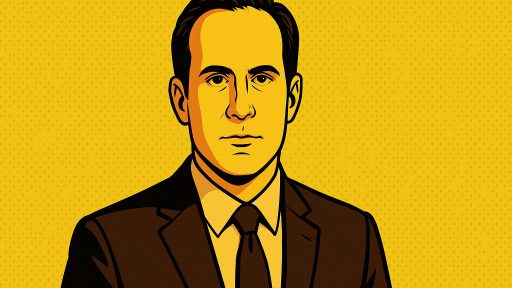
When most investors were celebrating the housing boom in 2005, one man was quietly betting against the entire system. Michael Burry didn’t just predict the 2008 financial crisis—he made billions from it while everyone else called him crazy.
His story isn’t just about making money. It’s about having the courage to stand alone when everyone else is running in the opposite direction. And frankly, that’s a lesson every investor needs to learn.
Table of Contents
Who Is Michael Burry?

Michael James Burry is one of the most fascinating figures in modern finance. But here’s what makes his story even more compelling: he wasn’t supposed to be an investor at all.
Born in 1971 in San Jose, California, Michael Burry initially pursued medicine. He completed his medical degree at Vanderbilt University and was working as a neurologist at Stanford Hospital. Most people would have been content with a stable, prestigious medical career.
Not Michael Burry.
From Medicine to Markets
In the late 1990s, while still practicing medicine, Michael Burry started investing his own money and posting his analysis online. His investment blog gained attention for its detailed fundamental analysis and contrarian viewpoints. He didn’t follow the crowd—he questioned everything.
His medical background actually gave him a unique advantage. The analytical thinking required for diagnosing complex medical conditions translated perfectly to dissecting financial statements and market conditions. He approached investing like a scientist, not a gambler.
In 2000, at age 29, Burry made a life-changing decision. He left medicine to start his own hedge fund: Scion Capital.
The Making of a Contrarian Investor

Early Success and Investment Philosophy
Michael Burry’s investment approach was refreshingly simple yet incredibly disciplined. He focused on value investing—buying undervalued companies and holding them until the market recognized their true worth.
His early track record was impressive:
- From 2000 to 2008, Scion Capital achieved net returns of 489.34%
- During the same period, the S&P 500 returned just 3%
- He consistently outperformed major market indices by massive margins
But what set Michael Burry apart wasn’t just his returns. It was his methodology.
The Michael Burry Method: Deep Dive Analysis
Burry’s investment process was exhaustive. He would:
- Read everything: Annual reports, 10-K filings, footnotes—especially the footnotes
- Question assumptions: If everyone believed something, he’d investigate why
- Focus on data over sentiment: Market emotions didn’t influence his decisions
- Think independently: He formed his own opinions, regardless of popular consensus
This approach required patience. Lots of it. Burry often held positions for years, weathering criticism and doubt while waiting for his thesis to play out.
The Big Short: How Michael Burry Predicted the 2008 Crisis

Spotting the Housing Bubble
By 2005, most Americans viewed real estate as a sure thing. Home prices had been rising for years. Banks were lending money to almost anyone. The phrase “housing prices never go down” was repeated like a mantra on Wall Street.
Michael Burry saw something different.
He started noticing disturbing patterns in mortgage data:
- Loan-to-value ratios were dangerously high
- Credit scores of borrowers were declining
- Adjustable-rate mortgages were set to reset at much higher rates
- Banks were packaging risky mortgages into seemingly safe securities
The Research That Changed Everything
What Burry discovered shocked him. He analyzed thousands of individual mortgage loans that had been packaged into mortgage-backed securities. The quality was terrible. Many borrowers had lied about their income. Some had no income at all.
He realized the entire system was built on a foundation of sand.
But here’s the thing about being right too early: everyone thinks you’re wrong.
Creating the Trade
Michael Burry faced a problem. How do you bet against an entire housing market? Traditional short selling wouldn’t work for mortgage securities. So he worked with Wall Street banks to create something new: credit default swaps on mortgage securities.
Think of it as insurance on bonds. If the bonds failed, he’d get paid. If they didn’t, he’d lose his premium payments.
The banks were happy to sell him these swaps. They thought he was crazy. After all, housing prices never go down, right?
How Much Money Did Michael Burry Make?

The Numbers Behind the Big Short
The exact amount Michael Burry made from his famous trade has been a subject of much speculation. Here’s what we know:
Personal Profits: Burry personally made approximately $100 million from the subprime mortgage bet. Not bad for someone everyone thought was crazy.
Fund Returns: His fund, Scion Capital, made roughly $725 million in profits from the trade. When you consider the fund’s total assets under management, this represented an extraordinary return.
Total Impact: The overall value created by Burry’s position was estimated at around $2.6 billion. This figure includes not just direct profits but the total value of the credit default swaps at their peak.
Breaking Down the 2008 Performance
In 2008, while the market collapsed:
- The S&P 500 fell 37%
- Many hedge funds lost 20-30% or more
- Burry’s fund gained over 150%
It wasn’t just about the money, though. Burry had been paying premiums on his credit default swaps for nearly three years. His investors were getting restless. Some wanted to pull their money out.
He held firm. And it paid off spectacularly.
What Michael Burry Did After 2008
Closing Scion Capital
After his incredible success, Michael Burry made a surprising decision. In 2008, he closed Scion Capital to outside investors. He was tired of dealing with investor pressure and wanted to focus on managing his own money.
This wasn’t unusual for Burry. Throughout his career, he’s shown a preference for independence over growth. He values intellectual freedom more than assets under management.
Scion Asset Management
Michael Burry reopened his fund in 2013 as Scion Asset Management, initially managing only his own money. Eventually, he began accepting a limited number of outside investors again.
His post-2008 investments have been characteristically contrarian:
- Heavy positions in water rights and farmland
- Investments in rare earth metals
- Technology stocks during market downturns
- Energy sector plays
Recent Warnings and Predictions
Michael Burry hasn’t stopped making bold predictions. In recent years, he’s warned about:
- Excessive speculation in tech stocks
- The dangers of passive investing
- Potential bubbles in various asset classes
- The risks of excessive government debt
Some of his warnings have proven prescient. Others are still playing out.
Michael Burry’s Investment Principles
Core Philosophy
Burry’s success stems from several key principles that any investor can apply:
1. Think Independently Don’t follow the crowd. When everyone is buying, ask yourself why. When everyone is selling, look for opportunities.
2. Do Your Homework There’s no substitute for thorough research. Read financial statements. Understand the businesses you’re investing in.
3. Be Patient Good investments take time to pay off. Don’t expect immediate results.
4. Accept Being Wrong Even the best investors make mistakes. The key is to learn from them and move on.
5. Question Everything Just because something has always been true doesn’t mean it always will be. Markets evolve, and assumptions need constant testing.
Risk Management Lessons
The Michael Burry approach to risk is sophisticated:
Position Sizing: He never bets everything on one idea, no matter how confident he is.
Time Horizon: He thinks in years, not quarters. This allows him to weather short-term volatility.
Contrarian Timing: He often enters positions early and holds them through periods of doubt and criticism.
Diversification: While he makes concentrated bets, he ensures his overall portfolio isn’t dependent on any single outcome.
Lessons for Modern Investors
What We Can Learn from Burry’s Success
Research Is Everything In our age of instant information, the success of Michael Burry reminds us that deep research still matters. Social media tips and hot stock picks are no substitute for understanding businesses fundamentally.
Emotional Discipline Pays Burry’s ability to maintain his positions despite criticism and doubt was crucial to his success. Emotional discipline might be the most important skill for any investor.
Think Long-Term Quick profits are nice, but sustainable wealth comes from patient, long-term thinking. Burry’s biggest wins took years to develop.
Question Popular Wisdom When everyone agrees on something, it’s often wrong. The biggest opportunities come from seeing what others miss.
Practical Applications
Here’s how you can apply Burry’s principles to your own investing:
Start Small: You don’t need millions to think like Burry. Begin with thorough research on companies you understand.
Read Annual Reports: Most investors don’t read these. That’s your opportunity.
Think Contrarian: When everyone is excited about a stock or sector, ask what could go wrong.
Be Patient: Don’t expect immediate results. Good investments compound over time.
Keep Learning: Markets evolve. Stay curious and keep studying.
The Burry Effect on Modern Finance
Impact on Wall Street
Burry’s success in predicting the 2008 crisis had lasting effects:
Increased Scrutiny: Regulators began paying more attention to systemic risks in the financial system.
Risk Management Evolution: Banks and hedge funds updated their risk models to account for previously unthinkable scenarios.
Contrarian Respect: The investment community gained new respect for contrarian viewpoints and independent thinking.
Cultural Impact
The story of Michael Burry reached mainstream audiences through:
“The Big Short” Book: Michael Lewis’s bestselling book brought Burry’s story to millions of readers.
Hollywood Movie: The 2015 film starring Christian Bale as Burry introduced his story to an even broader audience.
Investment Education: His approach has influenced a new generation of value investors and contrarian thinkers.
Current Activities and Recent Investments
Scion Asset Management Today
Michael Burry continues to manage Scion Asset Management, though he keeps a relatively low profile. His recent investments have included:
Technology Stocks: Despite warnings about tech bubbles, he’s selectively invested in undervalued tech companies.
Value Plays: He continues to find undervalued stocks in out-of-favor sectors.
Macro Bets: His positions often reflect broader economic themes and concerns.
Social Media Presence
Burry occasionally shares his thoughts on Twitter, though his account is often deleted and recreated. His tweets tend to be cryptic but are closely watched by investors seeking insights into his thinking.
His social media activity often hints at his current concerns and investment themes, though he rarely provides specific investment advice.
Criticisms and Controversies
The Challenges of Success
Burry’s success hasn’t come without criticism:
Timing Issues: Some of his post-2008 predictions have been early or haven’t materialized as expected.
Communication Style: His cryptic communication style and frequent social media deletions have frustrated some followers.
Limited Access: His fund’s limited capacity means most investors can’t directly benefit from his strategies.
Learning from Setbacks
Even great investors face challenges. Burry’s occasional misses remind us that:
- No one is right all the time
- Market timing is extremely difficult
- Success in one area doesn’t guarantee success in others
These setbacks don’t diminish his achievements but rather humanize them.
The Future of Burry-Style Investing
Evolving Markets
As markets evolve, Burry’s core principles remain relevant:
Independent thinking is always valuable, perhaps more so in our age of information overload.
Thorough research becomes even more important as markets become more complex.
Patience and discipline are timeless virtues in investing.
Technology and Analysis
Modern technology provides tools that Burry couldn’t have imagined when he started:
- Advanced data analysis capabilities
- Real-time information access
- Sophisticated modeling tools
Yet his fundamental approach—questioning assumptions and thinking independently—remains as relevant as ever.
Key Takeaways for Your Investment Journey
Michael Burry’s story offers several crucial lessons:
Success requires courage. Being right when everyone else is wrong takes tremendous conviction and emotional strength.
Research is non-negotiable. There’s no substitute for understanding what you’re investing in.
Patience pays. The best investments often take years to reach their full potential.
Think differently. Following the crowd rarely leads to exceptional results.
Stay humble. Even the best investors make mistakes. The key is learning from them.
Burry’s journey from neurologist to legendary investor shows that with the right approach, dedication, and a willingness to think independently, extraordinary results are possible.
His story isn’t just about making money—it’s about having the intellectual honesty to see reality clearly, even when it’s uncomfortable. In a world of noise and speculation, that clarity is more valuable than ever.
Whether you’re a beginning investor or a seasoned professional, Michael Burry’s principles offer a roadmap for navigating uncertain markets. The question isn’t whether you’ll face difficult decisions—it’s whether you’ll have the courage to make them when the time comes.
Remember: the biggest opportunities often look like the biggest risks. The key is knowing the difference.

About the Author
Felipe is a finance and business professional with hands-on experience in credit analysis, sales strategy, and financial decision-making.
He created Monkey Money Blog to help readers understand how credit systems, financial products, and investing structures actually work — beyond marketing language and surface-level advice.